 By Philip Westwood, Lodge Almoner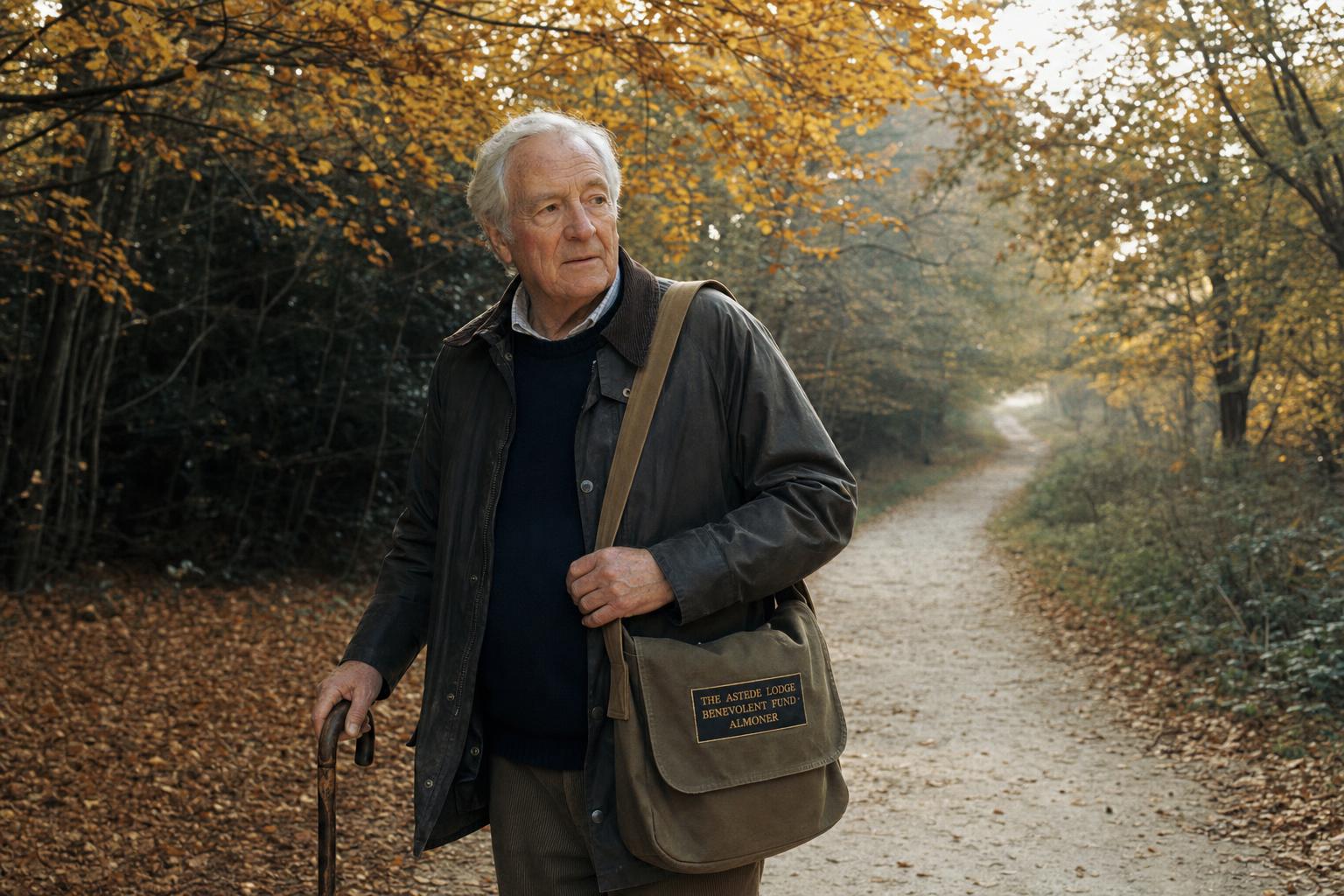
There is a footpath, just over two miles, between St Mary's Fetcham and St Giles Ashtead, that I have been walking quarterly for the seven years I have held this post. It begins behind the church-yard wall on the lane out of Fetcham, drops into a hollow by the duck-pond, climbs through the beech wood above the Mole, and emerges on the lane that runs down past the Common into Ashtead village. It is not a remarkable walk. It takes me, on a slow afternoon, the better part of an hour and a half. I have come to think of it as the most useful single thing I do as Almoner of this Lodge.
I do not walk it for fitness, though I am told it is good for me. I do not walk it for the view, though there is a bench by the wood I am partial to in October. I walk it because it is the closest thing I have to an office, and because in the seven years since I took post, I have not yet had a quiet walk along it without some small piece of useful information falling into my lap — a name remembered, a worry mentioned, a Brother's grand-daughter pointed out as she came home from school.
The footpath, in other words, is the place where the work of this fund actually begins.
What the footpath tells me
I do not always meet people on the walk. There are afternoons when I see nothing but a fox crossing the bridleway and the last cyclist of the day. But on those afternoons when I do meet someone — usually outside the second of the two pubs on the route, sometimes by the duck-pond, occasionally on the bench in the wood — I have come to expect a particular kind of conversation.
It begins with weather, or with a dog, or with the price of fuel. It moves, often within five minutes, to a piece of news the speaker has been carrying without quite knowing whom to tell. A neighbour whose husband is back in hospital. A widow on the other side of Ashtead who has been pretending the boiler is fine but actually it has been off since Boxing Day. A grand-daughter at the local primary whose mother lost her job in February. A retired Brother — not one of ours, but known to a Brother of ours — whose pension has not gone as far as he had planned.
I write none of this down on the walk. I have a kitchen-table evening, that same week, when I sit and write the names in pencil into the back of the Almoner's diary. From there a name may turn into a confidential conversation, which may turn into a request to the Trustees, which may turn into a cheque. Or it may turn into nothing — many names never go further than the pencil entry. The point is that without the walk, the names would not have arrived at all.
"The footpath is the place where the work of this fund actually begins. Almost everything we have done in seven years started as something somebody told me on it."— Philip Westwood, Lodge Almoner
The four walks of the year
I aim to walk the path once a quarter — late March, mid-June, early September, late November. The seasons matter more than I had expected when I started. Each quarter brings its own small recurring set of conversations.
In March, the talk is mostly of winter — what bills are still coming in, what shortfalls have not yet been met, what bargain a neighbour has struck with their boiler man. June is the quietest of the four, but it is the one in which the year's local-charity grants are usually mentioned, because we are giving them at Easter and people have read of them in the parish magazine. September brings the new term — and with it the small mentions of school uniforms, of children's bus passes, of half-terms that landed at an awkward week. November is the most useful and the most painful. By the second weekend of the month I know almost everyone who will need a Christmas envelope this year, and which envelopes will need a card on the anniversary.
I have stopped trying to walk the path between Christmas and the New Year. I tried it twice, in my first year, and was so tired by the end of it that I ended up walking through Ashtead in the dark. The widows can wait until late January now; they always have.
What I do not do on the walk
I do not, on principle, give money on the walk. I have been asked, once or twice, by Brethren who have caught me by surprise outside the pub — and I have always declined politely, and asked them to ring me at home. The walk is for hearing, not for deciding. Decisions belong to the Trustees, around the kitchen table, two-to-a-cheque.
I also do not, when I am asked, give the names of those we have helped — not in the pub, not by the duck-pond, not anywhere. Confidentiality is the only thing this fund has that is worth more than its money, and I treat the names in the back of the diary the way the Brethren treat the Lodge minute book — not as a secret, exactly, but as a private matter that does not belong to me.
A walk that I am beginning to share
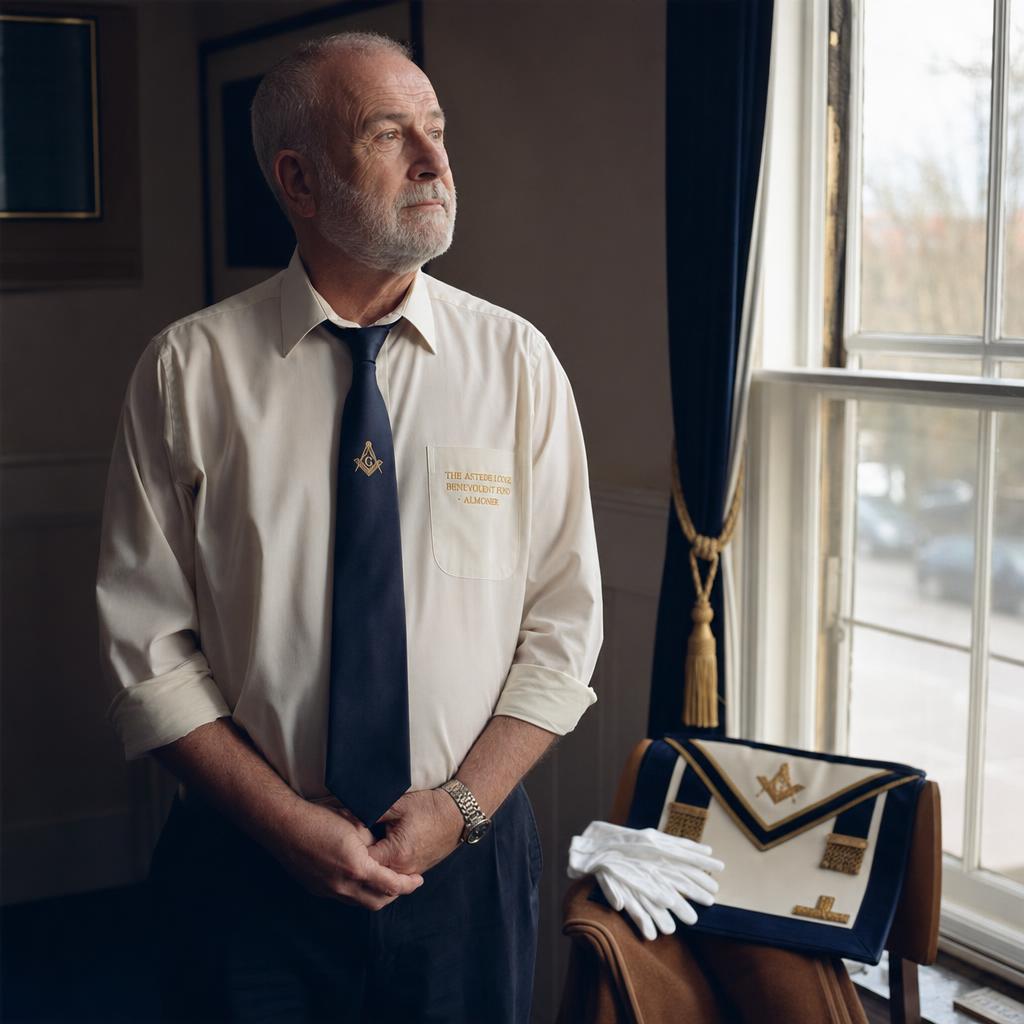
I am sixty-four this year. I have been Almoner since 2018. The Trustees and I have not yet talked about the question of succession in any formal way, but it has begun to come up on the walk itself. Brothers ask me — almost always with a kind embarrassment — how long I think I will do this. The honest answer is until someone else is ready to take it on, or until I am no longer up to the path. Whichever comes first.
When the time does come, I shall ask my successor to walk the path with me, in each of the four seasons, before they take over. Some of what passes for the wisdom of this post is, I think, just knowing which bench to sit on in October.
This piece will appear in our spring 2026 dispatch. If you would like to receive future dispatches, subscribe here. To support this work, please make a small gift. Reg. Charity 218915.